
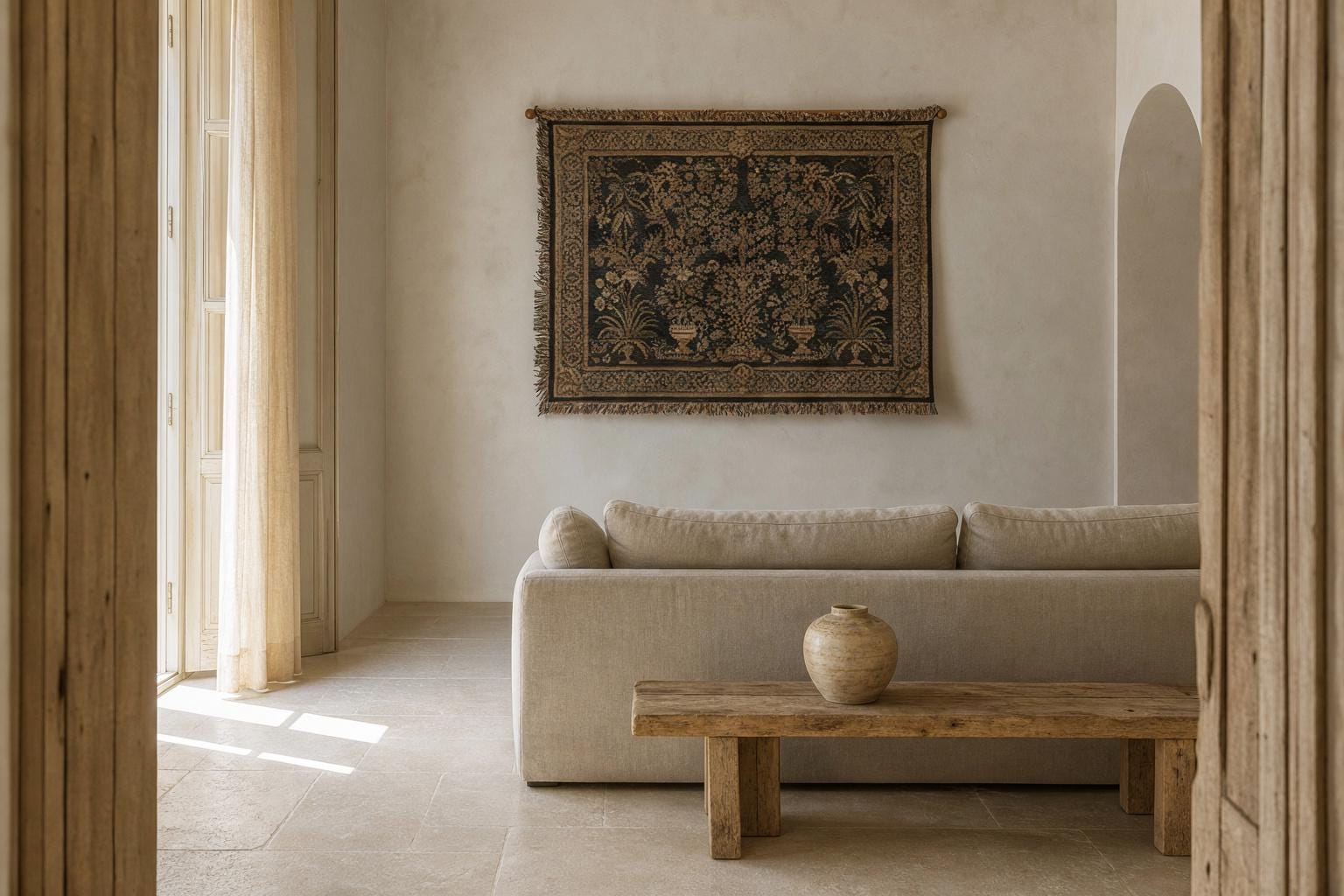
The most useful Airbnb wall decor ideas do not begin with a trend or a shopping list. They begin with the question a guest quietly asks on arrival: Where am I, and why does this place feel different from every other rental?Wall art can answer that question without covering the room in landmarks, slogans or themed props. A strong rental interior uses art to establish atmosphere, connect with place and create a recognizable image for the listing. It also leaves enough visual and physical space for guests to inhabit the room comfortably.
Start With a Point of View, Not a Theme
Themes are usually literal. A seaside apartment receives shells and anchor signs. A city loft receives a skyline print. A cottage receives a collection of objects selected mainly because they look old.A point of view is more flexible. It might describe the property as:
- a quiet base for exploring a dense city;
- a house shaped by Mediterranean light and mineral color;
- a reading retreat built around books, textiles and warm timber;
- a contemporary room inside historic architecture;
- a guesthouse where regional craft meets a restrained interior.
Once that sentence is clear, wall decor becomes easier to edit. Each piece either strengthens the story or distracts from it.
Use Culture as Context, Not Costume
Cultural wall art requires more care than matching motifs to a destination. A pattern is not automatically authentic because it looks old, handmade or “ethnic.” Before using a culturally specific image or textile, ask:
- Who created it?
- Is the origin described accurately?
- Is the work contemporary, historical, reproduced or merely inspired by a tradition?
- Do you have permission to display or reproduce the image?
- Can the property explain the connection honestly?
Local art is a strong option when it is genuinely local and the artist is credited. Historical references can also work when sourced responsibly from licensed archives or public-domain collections. Contemporary art does not need to imitate the past to create a sense of place; material, palette and scale can build a more subtle relationship with the setting.Airbnb encourages hosts to showcase their community, including through local art. The important word is showcase: give the work enough context for guests to understand why it is there.
Replace Surface Clutter With Wall Presence
Decorative objects on tables and shelves compete with the practical needs of a rental. Guests need room for keys, laptops, toiletries, food and luggage. Cleaners need surfaces they can reset consistently.Wall-mounted art creates character without consuming that space. Consider:
- one large woven textile in the main room;
- a pair of related works above twin beds;
- a small local artwork beside a reading chair;
- a restrained series in a corridor;
- a wall hanging that connects the bedroom palette to the rest of the property.
The aim is not bare minimalism. It is to concentrate meaning where it has the most impact.
Design for the Listing Photograph and the Actual Stay
A rental is experienced twice: first through a screen, then in person.For the listing photograph, choose art with a readable silhouette, enough scale and contrast, and a placement that helps explain the room. Avoid tiny frames that disappear in thumbnails or highly reflective surfaces that create glare.In person, the work should reward closer attention. This is where textile art becomes interesting. From across the room, a woven piece reads as a pattern field. Up close, thread and color variation become visible. The guest receives more than the flat image shown online.Airbnb recommends a mix of wide, medium and close photographs. Use the same logic for the art: show how it holds the room and then show what it is made of.
Five Art-Led Airbnb Wall Decor Directions
1. The Textile Anchor
Use one large woven wall hanging to establish the room's palette and visual rhythm. Keep nearby bedding and accessories quieter so the textile has space to work.
2. The Local Artist Pairing
Combine one locally sourced artwork with a complementary textile or object. Credit the artist in the house guide instead of turning the room into a retail display.
3. The Contemporary-Historic Contrast
In a period building, use contemporary art rather than reproducing every historical detail. The contrast can make original architecture feel more visible.
4. The Pattern-Led Room
Choose a primary pattern, then repeat one color or rhythm through a throw, cushion or smaller artwork. Do not repeat the same motif everywhere.
5. The Quiet Cultural Reference
Work from a real material, landscape color, literary history or design movement connected to the place. Avoid reducing a culture to a symbol downloaded from a marketplace.
Make the Art Legible to Guests
A short note in the house guide can transform decoration into culture. Include:
- artist or studio name;
- work or collection name;
- material or technique;
- place of origin, if relevant and verified;
- one sentence explaining why the host selected it.
This information should feel like an invitation, not a lecture. The guest can engage as much or as little as they wish.
The JacquardiaCo Position
JacquardiaCo creates contemporary woven textile objects rather than replicas presented as historical artifacts. Our patterns are designed for the weave and for the room: visible from a distance, materially specific up close and able to move between wall, bed and interior layer where the product details allow.For an Airbnb or guesthouse, a JacquardiaCo piece can become part of a broader art direction. It should support the property's story—not pretend to supply a local history it does not own.Explore JacquardiaCo woven wall art for distinctive guest spaces.
Frequently Asked Questions
How can I make Airbnb decor look less generic?
Begin with one clear story about the property, use fewer but larger art pieces, credit real artists and remove decorative objects that do not add meaning or function.
Should Airbnb wall art match the local area?
It should relate thoughtfully to the place, but it does not need to be literal. Local authorship, regional materials, verified cultural references, landscape color or contemporary contrast can all build a sense of place.
Is expensive original art necessary in an Airbnb?
No. The work needs to be appropriate to the property, securely installed and honestly described. A strong edition, licensed image or contemporary woven textile may serve the room better than a fragile or irreplaceable original.